Search
  • Home
  • Wine Dinner
  • Cafe at Home
  • Book Online
  • Events
  • Menus
  • Contact
  • The Team
  • Gallery
  • Careers
  • Cookbook Library
  • Recipes
Close
Menu
Search
Close
  • Home
  • Wine Dinner
  • Cafe at Home
  • Book Online
  • Events
  • Menus
  • Contact
  • The Team
  • Gallery
  • Careers
  • Cookbook Library
  • Recipes
Menu

Cafe St Honore

November 13, 2024

Neil’s cookbook of the week: The Art of Cookery by Elizabeth Taylor

by Cafe St Honoré


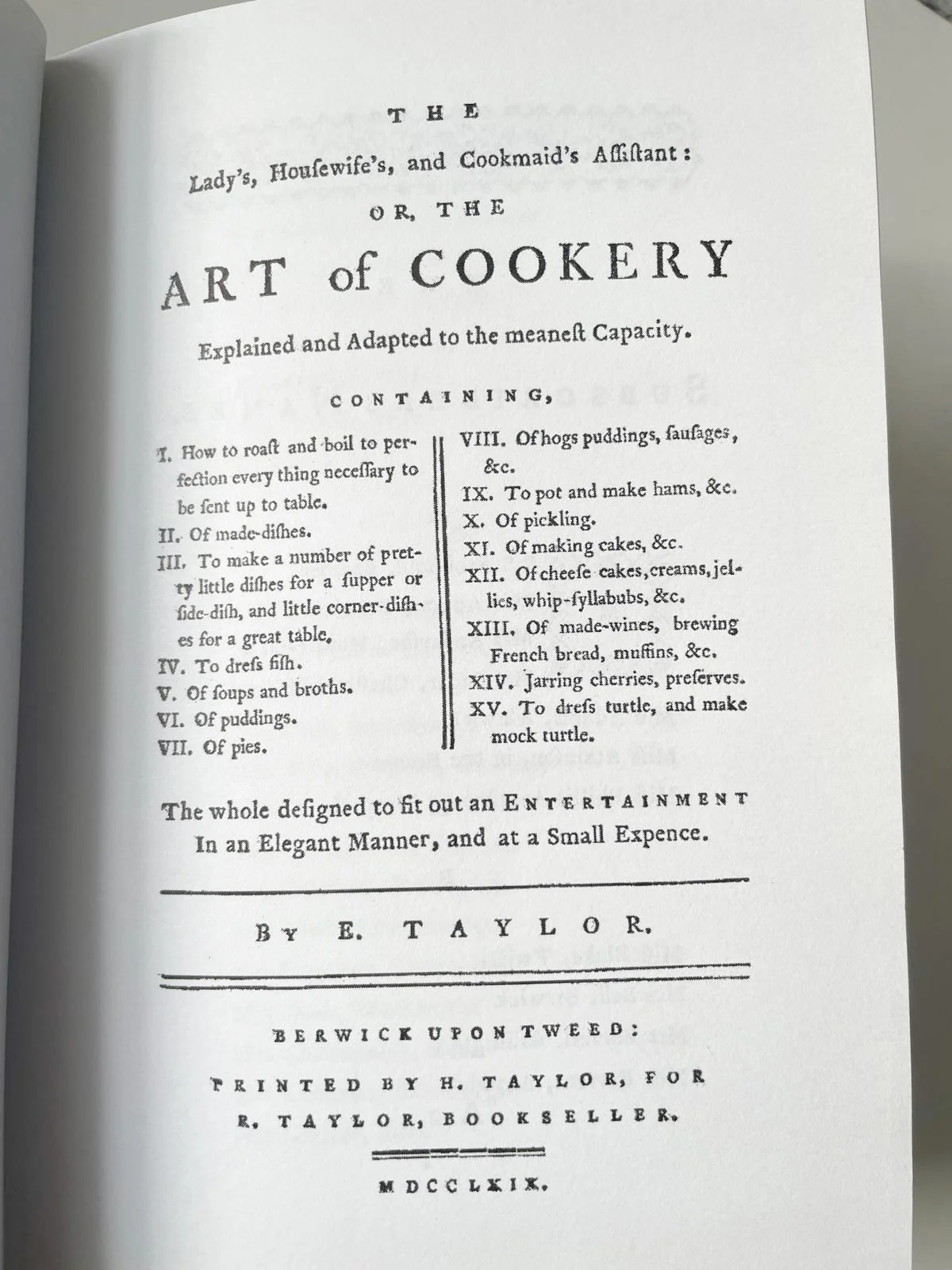
This week’s book is something special. It's an old one—sadly not an original, but a facsimile of Elizabeth Taylor's The Art of Cookery from 1769, produced by the Berwick History Society in 2002. It was a very limited run; this copy is number 189 of 300, gifted to me by an old friend. It’s a fabulous book, allowing the reader to glimpse life back then—how people dressed, lived, were housed, drank, and, of course, ate. 

Written not long after the final Jacobite rising, there must have been some undercover tartan stuff going on, as I believe it was still banned, even in the Lowlands. The author, Elizabeth Taylor, was the daughter of a prosperous merchant when Berwick was a thriving trading town. The book overlaps with the work of another cook of the time, Hannah Glasse, with similar recipes and often identical methods and ingredients. There was even a court case or two over it, though I’m not sure of the details.

This book wasn’t for everyday folk; it was aimed at the higher classes in the Border region, who could afford quality ingredients. The average home certainly didn’t have a cooker; cooking was done over a fire in a simple but-and-ben cottage, perhaps with a turf roof. Not a lot of folk could read, so unless you had a certain level of education, this book wouldn’t have been much use. The language is fascinating, with recipes written in the old style, using an “f” in place of the modern “s.” 

It’s remarkably concise, with plenty to work your way through. There are the usual sections on meat, poultry, and game, along with some amusing additions—such as “a good acid for punch,” “to ragoo a neck of veal,” and “to stew fresh neat’s tongues” (which we know now as beef or ox tongue). I was delighted to see an early version of sourdough, called “bread without barm, by the help of a leaven”, and a recipe for bread and butter pudding, a timeless favourite with a process quite similar to today’s.

The measurements are interesting too—bushels of this, pecks of that. One recipe for baking tench advises getting them fresh out of the pond, killing them with a hard stroke on the head, then scraping, gutting, and washing them. And then there’s “water gruel”, a blast from my childhood, here with the addition of sweet butter. There’s something for everyone, and I usually like to focus on the slightly more unusual dishes.

It’s a good book, still usable today (as long as you remember that “s” is “f”!). In the front, there’s a list of local subscribers, including a certain Mrs Forbes of Edinburgh—not the current one, I presume!
The Art of Cookery 2.JPG
The Art of Cookery 3.JPG
The Art of Cookery 4.JPG
The Art of Cookery 5.JPG
The Art of Cookery 6.JPG
The Art of Cookery 7.JPG
The Art of Cookery 8.JPG
The Art of Cookery 9.JPG
The Art of Cookery 2.JPG The Art of Cookery 3.JPG The Art of Cookery 4.JPG The Art of Cookery 5.JPG The Art of Cookery 6.JPG The Art of Cookery 7.JPG The Art of Cookery 8.JPG The Art of Cookery 9.JPG

November 5, 2024

Neil’s cookbook of the week: The French Laundry Cookbook by Thomas Keller

by Cafe St Honoré


This is a gem—a real chef’s book, and one that many of you may know. The French Laundry Cookbook by Thomas Keller is up there among the world’s cheffy favourites. Keller is a much-admired chef, a man who has built a unique kitchen culture. When an order is called out by the chef during service, his entire team replies with a unified “oui, chef.” There are scores of them in his kitchens, and he has been at the vanguard of food and cookery for decades. With multiple Michelin stars and huge respect within our industry, he seems calm, organised, and almost obsessive about the food he creates. For him, it’s a military operation, with no room for error—a true food nerd (meant as a compliment). He demands the utmost dedication from his team and absolute perfection at all times. I admire that, but to achieve it, you need an army of chefs, cooks, front-of-house staff, and office support.

Keller opened The French Laundry in 1994, and it has since won countless awards, often described as the best restaurant in America, if not the world. Although America has never particularly appealed to me—I went once, stopping in L.A. on my way back from Australia and New Zealand and didn’t quite “get” it—the Napa Valley, where Keller is based, looks stunning. Vineyards, sea breezes, sunshine, winding roads perfect for a motorcycle ride—probably a big Harley Davidson—and then arriving for a leisurely lunch. Yes, I see the appeal.

This book has many chapters that dive deep into Keller’s approach. Take ‘The Importance of Trussing a Chicken’. I love this because, while not essential, at Keller’s level, it’s crucial—he probably wouldn’t sleep at night unless the chickens were trussed just so. It’s OCD on a grand culinary scale. Another chapter I resonate with is ‘The Importance of Staff Meals’. An army marches on its stomach, and looking after the team’s wellbeing through their tums is a wise move. This book contains a multitude of beautiful recipes, but it’s more than a cookbook—it’s a coffee table book, a work of art. The images are stunning. One day, fingers crossed, I will go there.

In a roundabout way, I almost met Thomas Keller once. I was dining at St. John in London with friends, the day after the Michelin guide was released, and Keller happened to be seated at the table next to us. I had a quick chat with the waiting staff, who we had got to know after years of eating there, and asked if they would do me a favour and ask for his autograph for me. I spun a little story, saying I was working in the kitchen and would be thrilled to have his autograph. I watched as the waitress leaned over to whisper my tale in his ear. To my surprise, Keller took out a calligraphy set from his bag and spent a few thoughtful moments. Remember, I was at the next table, watching him with bated breath. Then, with a few swift, artistic strokes, he signed a menu and handed it back to the waitress, who brought it to the kitchen and finally over to me, saying, “There you go.”

It was pure theatre. I was embarrassed but delighted. I’ll always treasure that signed menu.

French Laundry 1.1.JPG
French Laundry 2.JPG
French Laundry 3.JPG
French Laundry 4.JPG
French Laundry 5.JPG
French Laundry 6.JPG
French Laundry 7.JPG
French Laundry 8.JPG
French Laundry 9.JPG
French Laundry 10.JPG
French Laundry 1.1.JPG French Laundry 2.JPG French Laundry 3.JPG French Laundry 4.JPG French Laundry 5.JPG French Laundry 6.JPG French Laundry 7.JPG French Laundry 8.JPG French Laundry 9.JPG French Laundry 10.JPG

October 30, 2024

Neil’s cookbook of the week: Claire Macdonald's Scotland

by Cafe St Honoré


Whenever I need to remind myself of who I am, what I do, and where I come from, I pick up this book for a few moments, flick through the pages, and take in the beauty of our land and sea. Scotland, The Best of Scottish Food and Drink by Claire Macdonald is a wonderful, soul-warming book, with tartan ahoy and beautiful images of hills, rivers, and glens. It’s a nostalgic piece for me, dating back to 1990 and signed by Lady Claire herself, who has become a good pal over the years. Bizarrely, we almost bought a flat years ago from one of her daughters—small world!

I love how this book highlights places to eat and stay (remember, this is 1990), with some fantastic spots that are still thriving today. There are excellent recipes here, with everything you’d expect—from creamy crab tart to smoked trout and a delicious oxtail stew, plus many tempting puddings. Scotland has an abundance of quality ingredients and a rich social food history, and we should be shouting about it. We’re better than the tartan tat shops that serve the tourists; delve a little deeper, and you’ll find incredible things across our beautiful land.

The MacDonalds run Kinloch Lodge on Skye, a beautiful hotel serving excellent food. One day, I’ll go—perhaps on the bike—eat, stay, and enjoy all it has to offer.

Claire Macdonald's Scotland 2.1.JPG
Claire Macdonald's Scotland 2.JPG
Claire Macdonald's Scotland 3.JPG
Claire Macdonald's Scotland 4.JPG
Claire Macdonald's Scotland 5.JPG
Claire Macdonald's Scotland 6.JPG
Claire Macdonald's Scotland 2.1.JPG Claire Macdonald's Scotland 2.JPG Claire Macdonald's Scotland 3.JPG Claire Macdonald's Scotland 4.JPG Claire Macdonald's Scotland 5.JPG Claire Macdonald's Scotland 6.JPG

October 22, 2024

Neil’s cookbook of the week: La Tante Claire by Pierre Koffman

by Cafe St Honoré


Here’s a lovely story. Sometimes I receive unexpected surprises in the post, and I recently had one of those moments. A follower of Cafe sent me La Tante Claire by Pierre Koffman and Timothy Shaw—a truly kind gesture. I already have a copy, so this one will take pride of place in the library at Cafe. Thank you, Barry, for your thoughtfulness.

It’s a wonderful book by a wonderful man. Pierre Koffman is a chef’s chef. He makes proper food—never pretentious, always focused on making it taste great. He stuck to his roots, drawing inspiration from his childhood visits to his grandparents, and his years working his way through various kitchens. This book is a masterpiece, showcasing food from the heart and soul of a man who was born to cook, simply and with bags of flavour.

The late '80s was an odd time in food. When this book was published in 1992, there was a lot of confusion about what nouvelle cuisine really meant, and many restaurants misunderstood it—with disastrous results. But Koffman stayed true to what he did best: cooking proper food, well. Think daubes of beef, slowly braised; roast duck with turnips; braised chicken with vegetables; foie gras with scallops and sauternes. Classic, elegant dishes, but the excellence lies in the execution, and his ability to stay true to his roots.

He’s widely regarded as one of the greatest influences on his peers and the next generation of chefs. He’s perhaps most famous for his masterpiece, the pig’s trotter, which I was lucky enough to eat at The Restaurant Marco Pierre White when he was cooking at The Hyde Park Hotel. It was a wonderful dish—rich, humble, tasty, and beautiful. It’s incredible that something so inexpensive can be turned into a 3-star dish.

This book tells a story—about how Koffman became a chef, the places he worked, and the success of his restaurant. I chuckled at the part where the rent in 1977 was £1,400 a year! I’ve read this book many times over the years, and it’s been a huge inspiration. I’ve never met Koffman, but maybe one day I will. He’s certainly inspired a generation of chefs to cook real food, and when you think of all the great chefs who’ve passed through his kitchens, it’s staggering.

La Tante Claire is not just a recipe book—it’s a storybook too, and a very good one at that. Thank you again, Barry—I’ll be passing this inspiration on to many young chefs thanks to your kind gesture.

La Tante Claire 2.JPG
La Tante Claire 3.JPG
La Tante Claire 4.JPG
La Tante Claire 5.JPG
La Tante Claire 6.JPG
La Tante Claire 7.JPG
La Tante Claire 8.JPG
La Tante Claire 2.JPG La Tante Claire 3.JPG La Tante Claire 4.JPG La Tante Claire 5.JPG La Tante Claire 6.JPG La Tante Claire 7.JPG La Tante Claire 8.JPG

October 16, 2024

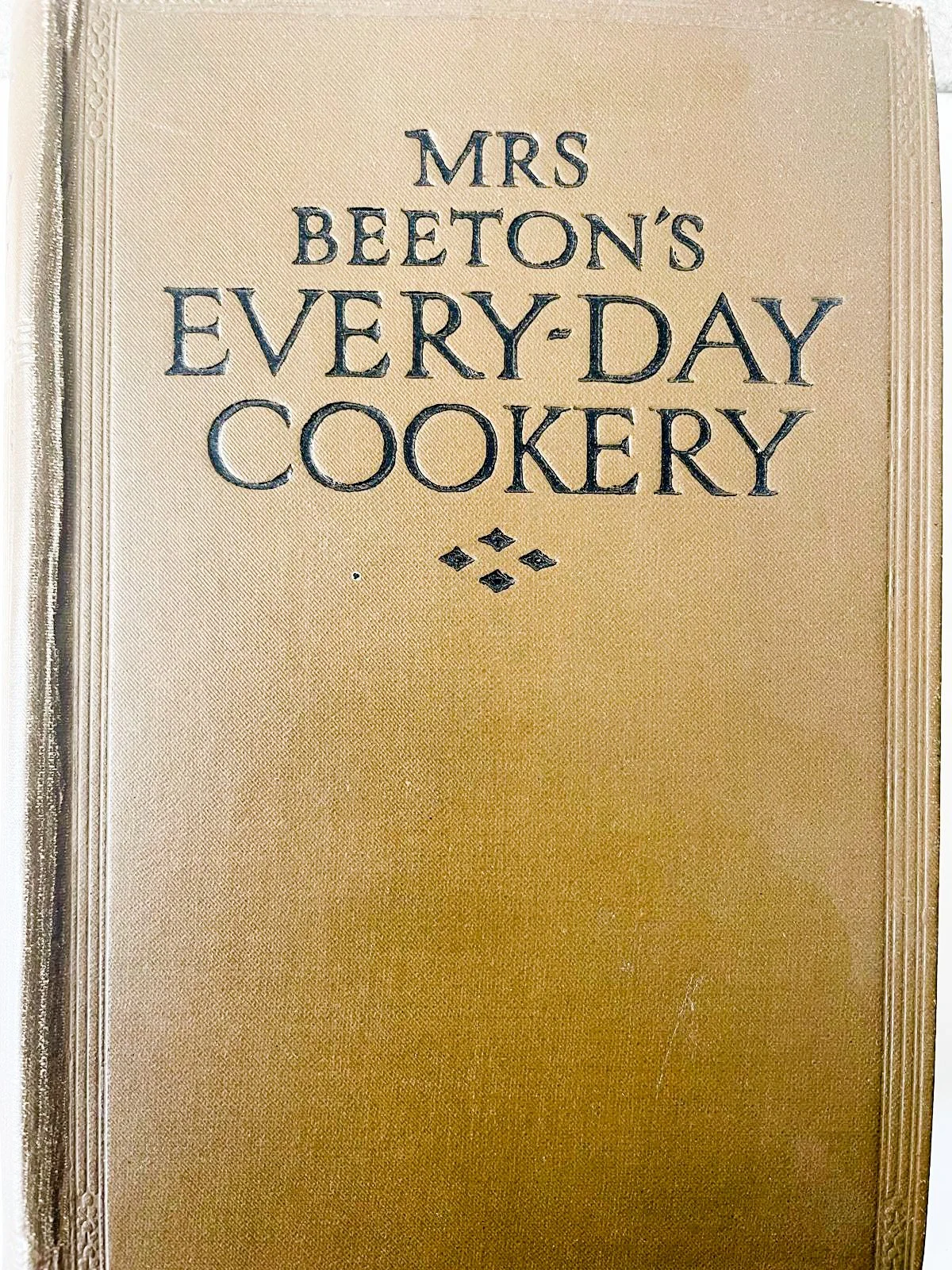
Neil’s cookbook of the week: Mrs Beeton’s Every-Day Cookery

by Cafe St Honoré


Like many of my books, I can’t quite remember where I bought Mrs Beeton’s Every-day Cookery. It was probably a church book sale on George Street here in Edinburgh a few years ago. I paid £15 for it—not a lot, and it’s in remarkably good condition. Considering its age, it’s almost like new, which I find a shame. It hasn’t been thumbed through enough, hasn’t been splattered with flour, grease, and egg whites. The pages are too clean! No dribbles from separating yolks from whites, no signs of serious kitchen use. 

The number of recipes is unbelievable, and they all read very well, with a touch of tradional charm. There’s a definite French influence throughout, but it’s great to see British dishes championed too—think Yorkshire ginger cake, veal and ham pie, toad in the hole, and of course, roast snipe (which I haven’t eaten in years). It’s more than just a cookbook, though. Mrs Beeton was known for her household management advice, and this is essentially a manual for running a home. How to clean your tortoiseshell, what equipment you need, how many servants to have—it’s all in there. 

This book was incredibly popular, selling many copies and making a fortune from both sales and advertising. Sadly, Isabella Beeton died at just 28, in 1865. She was married to an ambitious publisher and magazine editor who had her write recipes and household advice for his magazines and books. Some people criticise her work, others are in awe. Personally, I’m staggered by how much she knew at such a young age. Maybe people matured faster back then, becoming worldly-wise sooner. 

Most households, at some point, had a copy of one of her books. I have at least half a dozen and find them endlessly fascinating. She was an educated woman who knew a lot about food, spoke both French and German, and even translated great works from French to English. Her books are full of beautiful engravings and images. What stove should I buy? What mangle is best? How do I clean my rug? It’s all in there—a perfect read for a wet and windy day with a mug of tea and a biscuit.

Mrs Beeton 2.1.JPG
Mrs Beeton 2.JPG
Mrs Beeton 3.JPG
Mrs Beeton 4.JPG
Mrs Beeton 5.JPG
Mrs Beeton 6.JPG
Mrs Beeton 7.JPG
Mrs Beeton 8.JPG
Mrs Beeton 9.JPG
Mrs Beeton 10.JPG
Mrs Beeton 2.1.JPG Mrs Beeton 2.JPG Mrs Beeton 3.JPG Mrs Beeton 4.JPG Mrs Beeton 5.JPG Mrs Beeton 6.JPG Mrs Beeton 7.JPG Mrs Beeton 8.JPG Mrs Beeton 9.JPG Mrs Beeton 10.JPG

October 8, 2024

Neil’s cookbook of the week: Charcuterie and French Pork Cookery by Jane Grigson

by Cafe St Honoré


This is a fabulous little Penguin book by Jane Grigson called Charcuterie and French Pork Cookery. I absolutely adore it. I hadn’t picked it up for a while, and as I did, a few notes and scribbles for brine recipes fell out from when I last used it. 

This book is packed with essential and practical recipes—from sausages to terrines, pâté to black pudding. It’s concise but an enjoyable read, and her descriptions really draw you into the heart of French rustic cooking.

One of the fascinating sections is where she explores the various ways to make black pudding—some with apples or chestnuts, others creamy or made with onions or spinach. Grigson dives deep into the art of old French cookery, offering hearty, no-nonsense dishes. With many offal recipes, it’s a great way to see how to use the 'bits and bobs' that are often overlooked in modern cooking.

There’s a great recipe for making chitterlings, using up intestines and washing them down by the river, a true rustic experience. My personal favourite, though, is the Bath Chap—essentially the pig’s jaw, or jowl, which is slowly cooked and then fried in breadcrumbs until crispy. It’s a very old dish and utterly delicious. I love her casual note in the method: "When it's quite cold, cover with toasted breadcrumbs and cut the end of the snout off, as it upsets some people. Chill."

There are hundreds of ideas here to inspire you. I admire how Grigson encourages the economical housewife to buy a pig’s head for 3 or 4 shillings, and from that, you can create so many things—pig's ears with a piquant sauce, brains in puff pastry, Bath Chaps, sausage meat for pâté, and rillons (similar to rillettes). With 4 ½ pounds of boneless meat on the head, it’s extremely economical. You can even make a clear broth or aspic jelly from the bones.

If cooking is your thing, and you have a love for French charcuterie, this book is for you. And the best part? You can pick it up for next to nothing.

Charcuterie and French Pork Cookery 2.JPG
Charcuterie and French Pork Cookery 3.JPG
Charcuterie and French Pork Cookery 4.JPG
Charcuterie and French Pork Cookery 5.JPG
Charcuterie and French Pork Cookery 6.JPG
Charcuterie and French Pork Cookery 2.JPG Charcuterie and French Pork Cookery 3.JPG Charcuterie and French Pork Cookery 4.JPG Charcuterie and French Pork Cookery 5.JPG Charcuterie and French Pork Cookery 6.JPG

September 30, 2024

Neil’s cookbook of the week: Noma: Time and Place in Nordic Cuisine by René Redzepi

by Cafe St Honoré


It gives me great joy when I stumble upon a book I haven’t opened in years, only to discover flowers pressed between its pages, perhaps from an important event, tucked in with sheets of kitchen paper. The memories come flooding back. Today, the dried and pressed flowers I found were from my mother’s funeral—one rose and one thistle. Bittersweet memories, both sad and happy.

The book I’m sharing this week is Noma: Time and Place in Nordic Cuisine by René Redzepi. Many of you will recognise the name Noma, the iconic restaurant that put Copenhagen on the food map and defined the new Nordic way of cooking: keeping it simple, using clever techniques, and cooking with ingredients native to the region. I never had the chance to eat there, as reservations were impossible to come by—waiting lists were booked solid, and seasons sold out in a matter of minutes. But it was widely credited with sparking the trend of foodie tourism.

René was instrumental in reinventing Nordic cuisine. He honed his craft in kitchens like El Bulli and The French Laundry, two temples of gastronomy. He quickly became a world-famous chef; someone I had the pleasure of meeting once and seeing cook at a demonstration. He’s a master of taking food to unprecedented levels, always with a clever twist.

There’s a lot of wild, inventive stuff on the plates in this book—Danish squid with strawberries and verbena oil, celeriac and Icelandic moss, seaweed and egg yolk, musk ox with fresh young garlic and milk skin, caramelised garlic. I did get to taste his food once at a posh dinner in London, where he cooked a course. It was raw razor clam with horseradish and parsley—simple, clean, and bursting with flavour.

This is a beautiful book, visually stunning, but if I’m honest, I’ll probably never cook anything from it. It’s just a bit too much for me. Still, I love leafing through the pages and looking at the pictures.

Noma 6.JPG
Noma 2.JPG
Noma 3.JPG
Noma 4.JPG
Noma 5.JPG
Noma 7.JPG
Noma 8.JPG
Noma 9.JPG
Noma 6.JPG Noma 2.JPG Noma 3.JPG Noma 4.JPG Noma 5.JPG Noma 7.JPG Noma 8.JPG Noma 9.JPG

September 24, 2024

Neil’s cookbook of the week: The British Cook Book by Ben Mervis

by Cafe St Honoré


The British Cook Book by Ben Mervis is an essential for anyone who loves proper, simple, classic British cookery—especially if, like me, you crave food with soul. This isn’t about poncy dishes; it’s about flavour and heart, without worrying too much about presentation. 

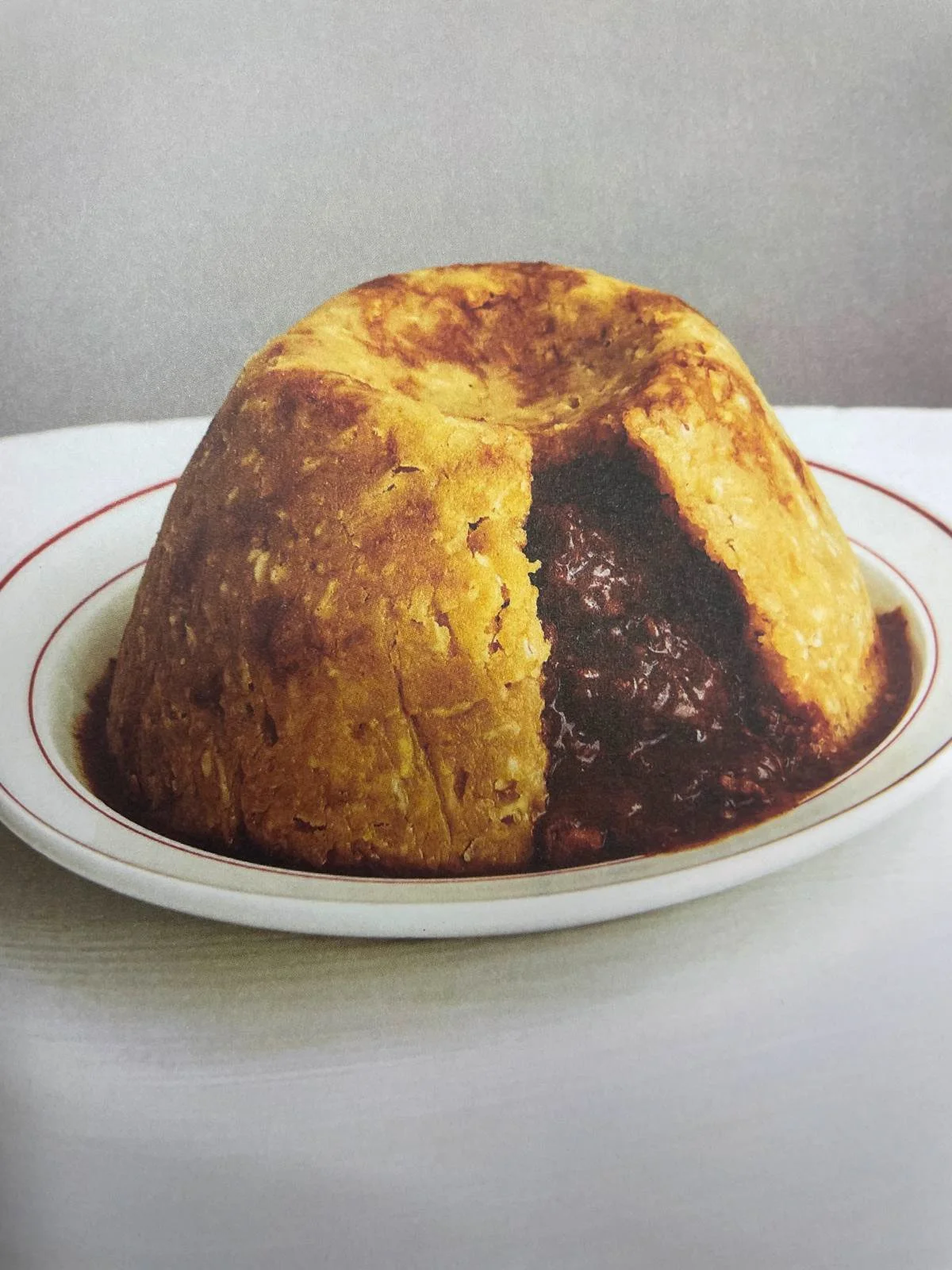
The book is a gem with 550 recipes to try on your loved ones. Of course, it covers the classics, but there are also some more unexpected options. It’s a particularly strong pudding book, with everything from Eton Mess and Summer Pudding to Sticky Toffee and more. There’s even a fantastic Ecclefechan tart recipe and one for Sussex Pond Pudding, a suet sponge with a whole lemon in the middle.

On the savoury side, it’s a joy to see dishes like roast grouse, proper pies, langoustines and mussel brose, herring in oatmeal—foods I love and smile at when they appear on a menu.

This is quickly becoming one of my favourites. It covers a huge amount with plenty of sections, including a good basics section. If you’ve never made a hot cross bun or shepherd's pie, you need this book. It will help you take a delicious stroll through our beautiful land and seashores, offering historical dishes too, with details about where the recipes come from and who created them. A truly great book.

The British Cook Book 2.JPG
The British Cook Book 3.JPG
The British Cook Book 4.JPG
The British Cook Book 5.JPG
The British Cook Book 6.JPG
The British Cook Book 7.JPG
The British Cook Book 8.JPG
The British Cook Book 9.JPG
The British Cook Book 10.JPG
The British Cook Book 2.JPG The British Cook Book 3.JPG The British Cook Book 4.JPG The British Cook Book 5.JPG The British Cook Book 6.JPG The British Cook Book 7.JPG The British Cook Book 8.JPG The British Cook Book 9.JPG The British Cook Book 10.JPG

September 17, 2024

Neil’s cookbook of the week: Cooking with Elizabeth Craig

by Cafe St Honoré


This week, we have another old book, and what a wonderful thing it is. Cooking with Elizabeth Craig is a very good book indeed, and one of my favourites. I can’t quite remember where I got it—perhaps my dad, but I’m not sure. It was a bestseller in its time, and I understand Elizabeth was very popular. It’s concise, well laid out, and was first published in 1932—almost 100 years ago. 

It begins with a guide to shopping and storing food, from a time before fridges. One line I particularly like reads: "to store meat, examine to see that there is no sign of fly, if there is, cut off part tainted and wipe remainder with a clean cloth dipped in equal quantity of warm water and vinegar." Brilliant advice! There’s also a note that you shouldn’t serve red wine with fish unless it’s salmon à la Parisienne.

The book contains about a thousand recipes, and it’s always exciting to open it and discover a dish you’ve never seen before. There’s a fantastic bread sauce recipe that I use, a brilliant pickled herring recipe, game dishes, and even instructions on how to cook capercaillie—though that's probably illegal now! There’s also a good haggis recipe, braised ox tongue, and a simple Scotch curry. With directions on how to prepare and cook almost anything, it remains a great 'go to' book.

Hailing from Kirriemuir, Elizabeth only spent a short time at cookery school but went on to publish many books in her lifetime, as well as becoming a great teacher. There’s a recipe for Glasgow gingerbread that I’m keen to try, which includes ground almonds and Barbados sugar—it sounds delicious. 

You can pick up a copy of this book for just a few pounds, but I think it’s worth far more. A great addition to any bookshelf.

Cooking with Elizabeth Craig 2.JPG
Cooking with Elizabeth Craig 3.JPG
Cooking with Elizabeth Craig 4.JPG
Cooking with Elizabeth Craig 5.JPG
Cooking with Elizabeth Craig 6.JPG
Cooking with Elizabeth Craig 7.JPG
Cooking with Elizabeth Craig 8.JPG
Cooking with Elizabeth Craig 2.JPG Cooking with Elizabeth Craig 3.JPG Cooking with Elizabeth Craig 4.JPG Cooking with Elizabeth Craig 5.JPG Cooking with Elizabeth Craig 6.JPG Cooking with Elizabeth Craig 7.JPG Cooking with Elizabeth Craig 8.JPG

September 12, 2024

Neil’s cookbook of the week: Bread Matters by Andrew Whitley

by Cafe St Honoré


If you’re a keen baker and love making bread, you may already have Bread Matters by Andrew Whitley in your collection. It’s one of my favourite books for inspiration, or when something goes wrong. The simplicity of a loaf of bread is staggering. Andrew was a founder of the Real Bread Campaign and Scotland The Bread, an organisation aimed at encouraging us to grow more grain to make our own bread. 

I’ve known Andrew for many years, and he’s a good friend. This copy was signed by him, and it always makes me smile, reminding me of a wonderful evening at Cafe with Slow Food and Andrew a few years ago. We ate good food, gathered around big tables, chatting about food, but mostly about bread.

The book is filled with recipes, many of which need to be read several times before starting, as some require a few days’ work—like beginning a leaven or mother starter to make the bread rise using the natural yeasts in the flour itself, rather than relying on chemical rising agents like baker’s yeast or bicarbonate of soda. It still fascinates me that a good, proper loaf of bread requires only flour, water, and salt—nothing else. That’s one of the reasons Andrew wrote this book: to spread the word about good baking and thoughtful ingredient choices.

My copy is well-worn and has been with me for years. I refer to it often, especially for the troubleshooting section, which offers solutions to many common sourdough problems. I’m also fortunate enough to be a judge for the Scottish Bread Championships every year, which is great fun and organised by Andrew.

If making a sourdough loaf has been on your mind but you’ve never tried it, buy this book and give it a go.

Bread Matters 2.JPG
Bread Matters 3.JPG
Bread Matters 4.JPG
Bread Matters 5.JPG
Bread Matters 2.JPG Bread Matters 3.JPG Bread Matters 4.JPG Bread Matters 5.JPG

  • Newer
  • Older

Cafe St Honoré, 34 North West Thistle Street Lane, Edinburgh EH2 1EA

Tel: 0131 226 2211

Email: eat@cafesthonore.com