Search
  • Home
  • Cafe at Home
  • Book Online
  • Festive
  • Events
  • Menus
  • Contact
  • The Team
  • Gallery
  • Careers
  • Cookbook Library
  • Recipes
Close
Menu
Search
Close
  • Home
  • Cafe at Home
  • Book Online
  • Festive
  • Events
  • Menus
  • Contact
  • The Team
  • Gallery
  • Careers
  • Cookbook Library
  • Recipes
Menu

Cafe St Honore

February 26, 2024

NEIL'S RECIPES: GRIDDLED PORTOBELLO MUSHROOMS WITH WILD GARLIC PESTO

by Cafe St Honoré in Recipes


“If you choose a vegetarian dish in a restaurant, it may contain mushrooms as they’re packed full of flavour. Here they’re served with an easy-to-make wild garlic pesto, made with any nuts you prefer. If you can’t find these big mushrooms, replace them with chestnut or button. And remember to season well.”

Serves 4
Prep time 20 minutes, cooking time 10 minutes

INGREDIENTS
8 large Portobello mushrooms, brushed clean and wiped with a damp cloth
250ml organic extra-virgin olive oil
50g hard cheese, grated
50g lightly-toasted hazelnuts or walnuts
A handful of washed and dried wild garlic
A few salad leaves
Good salt and pepper

METHOD
Place a griddle pan onto the hob and get it quite hot. Season the mushrooms, cut them in half and rub with a little olive oil, then place on the griddle until browned with the bar marks of the griddle, or even cook on the BBQ if it’s on. Cook for about 10 minutes, seasoning as you go and give another trickle of oil to the pan if it needs it.

Next, make the pesto by simply adding most of the wild garlic to a liquidiser with the cheese, nuts and remaining oil with a good pinch of salt and pepper. Blitz until the ingredients are all incorporated. The longer you blend, the smoother it will be. I like it quite chunky.

To serve, spoon the pesto onto warmed plates and place the mushrooms on the centre of the pesto. Scatter a few salad leaves around the edge of the plate. Wilt the retained garlic leaves on the griddle and drape these over the mushrooms.

TAGS: recipes


February 19, 2024

NEIL'S RECIPES: CROWDIE AND RHUBARB CHEESECAKE

by Cafe St Honoré in Recipes


“I love this recipe; it’s simple and tastes great. Crowdie is a soft cheese with a slightly granular texture, so give it a good whip. Adding honey works well, and either forced Yorkshire or garden rhubarb are fine. This keeps well in the fridge for a good few days.”

Makes 1 cake

INGREDIENTS

500g crowdie

500g semi-whipped cream, ribbon stage

8 egg yolks

6 leaves of gelatin

1 organic unwaxed lemon, finely zested

2 tbsps of honey (or to taste)

350g caster sugar

100g water

10 digestive biscuits or similar

75g butter, melted

A few stalks of rhubarb

1 vanilla pod

Zest of 1 orange

METHOD

Line the bottom of a 10-inch spring form cake tin with butter and a disc of silicon paper.

The day before you want to serve, blitz the biscuits into crumbs in a processor, then add the melted butter and half the lemon zest. Mix well and push into the bottom of the prepared tin. Chill for an hour.

Add 150g of caster sugar to a pot with the water and boil until it reaches 121°C - check with a digital thermometer. If you don’t have one, aim for a ‘soft ball’ texture. Allow to cool slightly.

Next, beat the yolks and gradually trickle in the sugar mix. Whisk until it’s voluminous. Cool for about 5 minutes.

Break up the crowdie and beat gently in a bowl. Add the semi-whipped cream and fold in the egg yolk mix.

Soak the gelatin leaves in cold water for 5 minutes. Then heat the honey in a small pot before mixing in the softened leaves. Add this honey mix to the cheesecake mix with the remaining lemon zest. Mix well and add to the biscuit base. Refrigerate overnight.

The following day, cut the rhubarb into batons about 3-inches long and spread out on an oven-proof tray or dish. Top with the remaining caster sugar, seeds from the vanilla pod and the orange zest.

Bake the rhubarb gently on a moderate heat for 15 to 20 minutes - don't overcook or it will turn to mush. Drain the syrup into a clean pan and reduce to a jam consistency. Allow the rhubarb to cool.

When ready to eat, remove the cheesecake from the tin by running a hot, wet, sharp knife around the edge of the tin to release it. Top with the rhubarb syrup and serve with a few batons of rhubarb.

TAGS: Recipes


February 12, 2024

NEIL'S RECIPES: CARAMELISED ONION AND CLAVA BRIE TARTS

by Cafe St Honoré in Recipes


Image: Paul Johnston, Copper Mango

“This is a very tasty dish and one that is on the menu a lot at Cafe. It’s simple to create, even if you have a go at making your own pastry. The slowly-cooked onions add truly amazing flavours to the dish. And the purple sprouting broccoli, very underused in my opinion, adds another layer of deliciousness, and pairs really well with the creamy Clava Brie from Connage Highland Dairy near Inverness. But you could try a different cheese, like a Lanark Blue, for a stronger flavour.”

Makes 4 small tarts

INGREDIENTS

250g plain flour

125g unsalted butter, diced small

Cold water to bind the pastry

12 slices of organic Clava cheese

2 large onions, peeled and thinly sliced

A good handful of purple sprouting broccoli, woody stalks removed

Good salt and pepper

50ml cold-pressed rapeseed oil

A few sprigs of thyme

METHOD

To make the pastry for the tart cases, add the plain flour and the diced butter to a mixing bowl and rub together until they resemble breadcrumbs. Then add a pinch of salt and trickle in enough cold water to make a good pastry dough. Wrap the dough in cling film and place in the fridge for an hour or so to rest.

Pre-heat your oven to 180°C and lightly grease and flour 4 small tart tins. Remove the chilled dough from fridge and flour your work surface. Cut the pastry into four evenly-sized pieces and roll each piece into a ball. Then roll each ball into 2mm-thick circles and place into your cases, trimming off the edges of any excess pastry. Blind bake with greaseproof paper (or 3 layers of cling film) and baking beans for 40 to 50 minutes - until the tarts are crisp and golden brown.

To caramelise the onions, heat 25ml of oil in a pot then add the sliced onions. Season with salt and pepper then put the lid on and cook on a medium heat for about an hour, stirring occasionally. The onions should be golden and caramelised. Remove from the heat and stir in a few sprigs of thyme.

Divide the onions between the 4 tart shells, then lay 3 slices of Clava cheese on top of each tart and trickle with a little oil. Top with some thyme leaves and season again. Gently warm the tarts under the grill or in the oven.

Next, bring a pot of water to the boil and blanch the purple sprouting broccoli for 3 to 4 minutes until tender. Remove from the water and season.

Divide the broccoli between 4 warmed plates and place the tarts on top. Trickle any remaining oil all over the tarts and broccoli, and serve.

TAGS: Recipes


February 5, 2024

NEIL'S RECIPES: FISHCAKES, WILTED SPINACH AND POACHED EGG

by Cafe St Honoré in Recipes


Image: Paul Johnston, Copper Mango

"We always sell out of these when they’re on the menu as they are just such a tasty way of eating. The little things to get right here are balance of lemon and herbs. Ask your fishmonger for fish pie mix, and even ask for the skin off. So very tasty and a recipe you will come back to again and again. A true classic."

Makes 4 fishcakes

INGREDIENTS

250g fishcake mix

3 large potatoes, peeled, boiled and mashed, no butter added

Juice and zest of 1 lemon

1 tablespoon capers

1 tablespoon chopped parsley and chives

2 spring onions, finely chopped

A splash of vinegar for the poached egg water

2 tablespoons plain flour

2 eggs, beaten, for egg wash

4 tablespoons breadcrumbs

4 organic eggs

2 big handfuls of washed spinach, I like baby spinach

A knob of butter

Good salt and pepper

Oil for frying

A little olive oil for drizzling

METHOD

Heat oven to 180°C.

Firstly ensure the potato mash is dry and still warm.

Next, place the fish on a baking tray and season with salt and pepper. Place in the oven until just cooked, moving it around if necessary.

Once ready, add the fish to a large mixing bowl with lemon juice and mashed potato and gently combine. Then add the zest of lemon, capers, parsley, chives, spring onions and season. Combine being careful not to over mix.

Divide the mixture into 4 and form into fishcakes. Place them on a sheet of greaseproof paper and place in the fridge until fully chilled.

Meanwhile season the flour and lay out the egg wash and breadcrumbs in small bowls. Coat each fishcake in flour, then egg wash then breadcrumbs.

Heat a deep fryer to 160°C and cook the fishcakes for 5 to 7 minutes until golden brown all over, turning carefully if necessary. Then place them in the oven (180°C) for a further 10 to 15 minutes until the centre of each fishcake is piping hot.

Meanwhile, bring a pot of water to just below the boil and add a splash of vinegar. Crack the eggs into the water and poach for 3 to 4 minutes.

Heat the knob of butter in a pan and wilt the spinach. Season with salt and pepper. This should only take 2 to 3 minutes.

To serve, arrange the spinach on warmed plates, placing the piping hot fishcake on top with the egg on top of that. Drizzle with a little olive oil, and finish with a grind of salt and pepper.

TAGS: Recipes


January 29, 2024

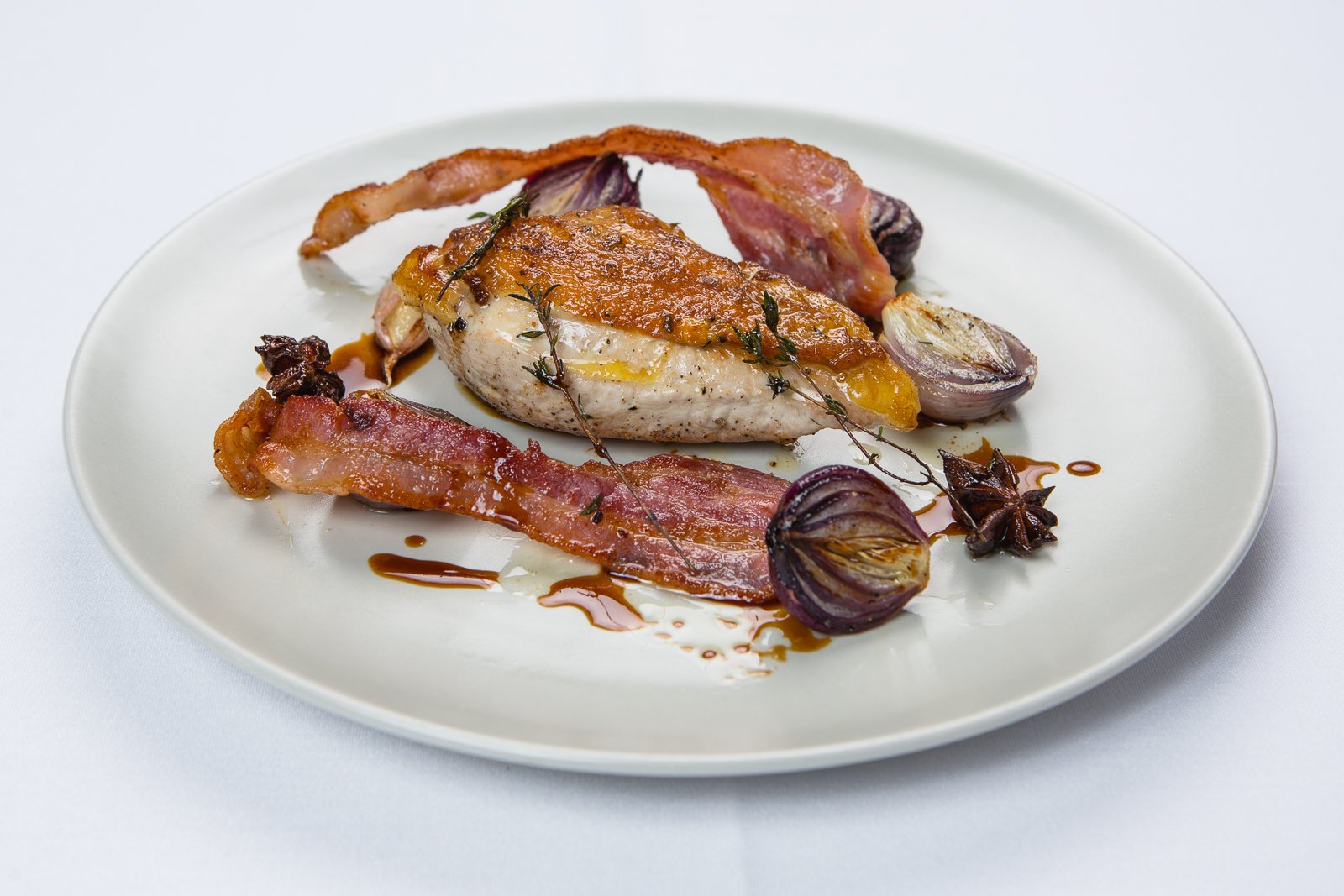
NEIL'S RECIPES: PHEASANT BREAST WITH STAR ANISE, CRISPY BACON AND RED ONION

by Cafe St Honoré in Recipes


“We’re using a lot of pheasant at the restaurant right now. Whole pheasant is relatively cheap, so use the legs for a terrine, or a stew like coq au vin. The bacon adds necessary fat, the roasted red onions are delicious, and the star anise adds an extra layer of flavour.”

Serves 4

INGREDIENTS

4 pheasant, breasts, skin on is best but without is fine

8 small red onions, peeled and halved

8 star anise

8 rashers streaky bacon

A few sprigs of thyme

100g butter

Good salt and pepper

Cold-pressed rapeseed oil for frying

METHOD

Heat oven to 180°C

Place a pan on the hob and get it hot. Add a tablespoon of rapeseed oil, and when it’s hot add the bacon to the pan. Fry until golden and crisp. Remove from the pan and leave somewhere warm on a bit of kitchen paper.

Use the same pan to heat another tablespoon of rapeseed oil then add the onions, cut-side down, to the pan. Season and add a couple of sprigs of thyme. Cook on a high heat for about 6 to 8 minutes then place them in the oven for about 20 minutes until golden and soft. Season the pheasant breasts whilst the onions are cooking.

Remove the onions from the pan and replace with the pheasant, skin-side down. Using the same pan ensures the pheasant will take on all those wonderful bacon and onion flavours. Add the butter to the pan and after 2 to 3 minutes you should achieve a nice, golden brown colour. Turn the pheasant over and add the star anise to the pan. Season again, and place in the oven to roast for 8 to 10 minutes, checking all the time so as not to over-cook. Pheasant can be eaten slightly pink, but not raw. Remove from the meat from the oven and allow to rest.

Once rested place each pheasant breast onto a warmed plate and top with the cooking juices and star anise. Accompany with the warm onions, crispy bacon and perhaps some bread sauce and watercress.

TAGS: recipes


January 22, 2024

NEIL'S RECIPES: TREACLE TART

by Cafe St Honoré in Recipes


“A classic British dish which needs no introduction, and a best-seller of ours at the Edinburgh Farmers’ Market. It’s deliciously simple served warm with either clotted cream or thick double cream. The kick of lemon in the recipe helps to cut through the richness.”

4 portions

INGREDIENTS

1 blind-baked 10-inch sweet pastry case

750g golden syrup

300g bread or cake crumbs

1 lemon, zested and juiced

1 egg, whisked

METHOD

Pre-heat the oven to 160°C.

Mix all the ingredients well and spread into the sweet pastry case.

Place on a tray in the middle of the oven (for even cooking) and bake for 40 to 50 minutes, or until the tart is golden brown on top.

Remove from the oven and allow to cool at room temperature. Serve with clotted cream or custard.

Perhaps best eaten warmed up the next day as the mix soaks up all the syrup.

TAGS: recipes


January 9, 2024

NEIL'S RECIPES: GINGER SPONGE

by Cafe St Honoré in Recipes


“I make this pudding in a large tray in the restaurant, but at home I make and serve it in a dish that goes from oven to table. If there are any leftovers, keep and eat it cold with a cup of tea and your feet up.”

INGREDIENTS

250g unsalted butter

140g dark brown sugar

330g golden syrup

2 eggs

200ml milk

6 pieces of stem ginger, roughly chopped

A pinch of salt

1.5 teaspoons cinnamon

1.5 teaspoons ground ginger

1.5 teaspoons bicarbonate of soda

420g plain flour

METHOD

Line a deep, 12-inch square baking tray with silicone paper. Cream the butter and sugar in a mixer until light and fluffy, then beat in the syrup, eggs, salt and sift in the flour, bicarb, cinnamon and ground ginger. Mix gently. 

Slowly pour in the milk - you may not need it all - then add the chopped stem ginger with a little syrup from the jar.

Combine and scoop the mix into the prepared tin and bake at 180°C for 35 to 45 minutes, until a knife comes out clean.

Serve with lashings of custard and ice cream.

TAGS: Recipes


January 1, 2024

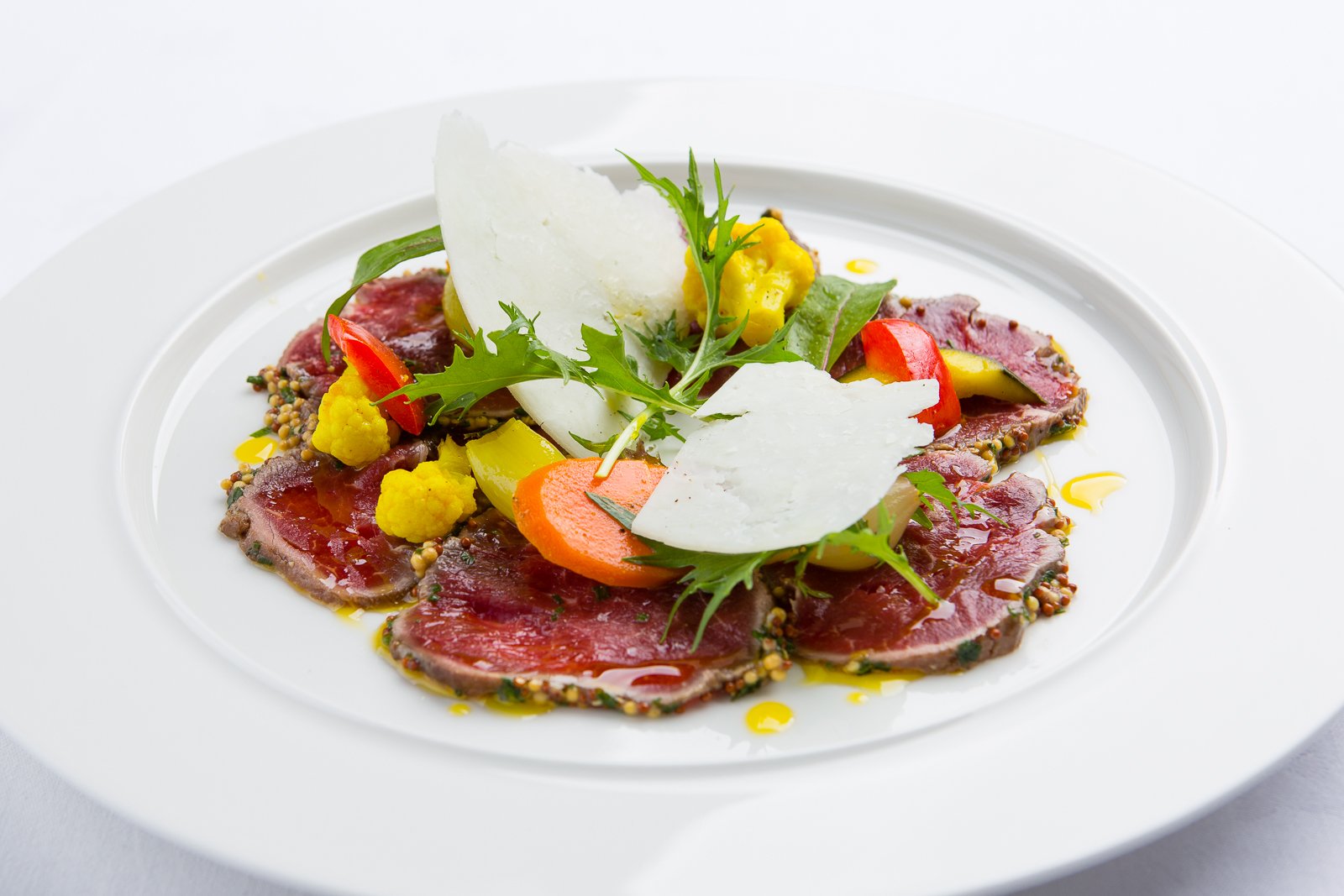
NEIL'S RECIPES: SCOTCH BEEF CARPACCIO

by Cafe St Honoré in Recipes


“Grass-fed organic Scotch Beef contains significantly more vitamins and minerals than non-organic, grain-fed beef; and its fat has a higher content of Omegas which are crucial for our health. Hung correctly and matured for further flavour and tenderness, it is almost effortless to prepare and cook with beef of this standard. This dish is named after a Venetian painter and is usually served with a little olive oil, lemon and white truffle or Parmesan. It’s totally raw, truly delicious and perfectly safe to eat. Serving raw beef is a real test of the quality of the meat and the provenance of the cattle. I’ve made this dish using many different cuts of beef for this in the past, but here I’m using fillet. It is expensive, but consider this a special dish to be savoured.”

Serves 4

INGREDIENTS

250g piece of fillet of Scotch Beef, trimmed and silver skin removed

1 tablespoon cold-pressed rapeseed oil

1 large tablespoon Arran mustard

Good salt and pepper

250mls cider vinegar

250mls water

250g unrefined caster sugar

400g mixed veg for picking e.g. cauliflower, carrot, onion, courgette, red pepper

A few aromas like star anise, cinnamon or thyme for flavouring your pickles

A few salad leaves

A few shards of Corra Linn or Bonnet cheese

METHOD

Firstly bring the vinegar, water and sugar to the boil on the hob with your chosen aromas and simmer for 3 minutes, then season with salt and pepper.

Blanch the pickling veg in boiling, salted water for 2 minutes until just starting to soften, then refresh under cold, running water. Then place them into the hot pickle liquor. Once done these can be stored for weeks in a sterilised jar.

Season the beef all over with salt and pepper then get a heavy frying pan very hot and add half the rapeseed oil. Then very quickly sear the beef all over for a couple of minutes maximum. This is just to remove the raw outer layer of the beef.

Make a paste with the mustard and the remaining oil, then season with salt and pepper. Rub this paste all over the just-seared beef and wrap it very tightly in cling film until it resembles a sausage. Make sure it’s firmly secured and tie the ends so it won’t unravel. Then place the beef in your freezer for about an hour. You don’t want it to be frozen solid, just to be firm.

To serve, simply remove the beef from the cling film and slice very thinly with a very sharp knife and arrange on a plate. Season with salt and pepper, then some salad leaves and some pickled veg. Lastly, add the shards of cheese and a final seasoning.

TAGS: Recipes


December 11, 2023

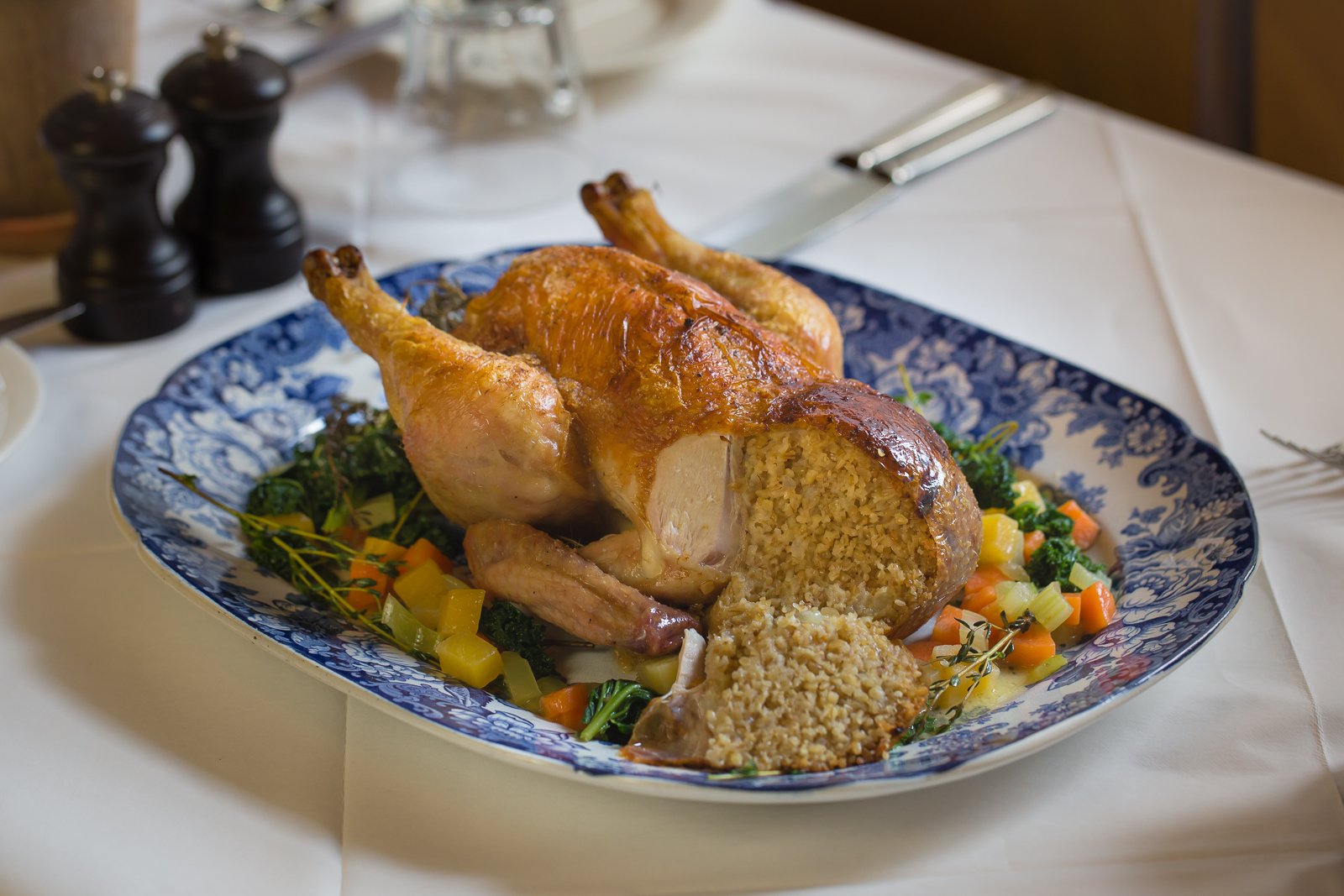
NEIL'S RECIPES: ROAST CHICKEN AND SKIRLIE

by Cafe St Honoré in Recipes


“As you all know, I adore roast chicken, but try adding skirlie. It’s basically a stuffing, but you can easily serve it as a side dish. A delicious way to grace any table.”

Serves 4

INGREDIENTS

1 free-range organic chicken – approx 1.5kg

4 onions peeled

1 sprig of thyme

1 organic Sicilian lemon

1 handful of sage

Sea salt and freshly-ground black pepper

A few knobs of butter

A glass of white wine

500ml good, dark chicken stock (ideally made from last Sunday’s roast chicken)

METHOD

Pre-heat oven to 200 C

Season the bird inside and out with salt and pepper.  Place the thyme, sage and half a lemon in the cavity.

Slice the onions and place in a roasting tin.  Lay the bird, breast side down, in the tin and put in the oven for half an hour.

Remove from the oven and turn the bird over, season again with salt and pepper and return to the oven and cook for a further half an hour.  Remove and rest for 20 mins before carving.

To make gravy.  Remove chicken and leave somewhere warm.  Place the roasting tin on the hob and add the glass of wine.  Bring to the boil and reduce by half.  Add the chicken stock and boil for 10-15 mins and add a few knobs of butter whisking all the time.  Push through a sieve squeezing all the goodness out of the onions.  Season again with salt and pepper and more lemon juice.

Serve with roasted potatoes and lots of local, seasonal veg.

TO MAKE SKIRLIE

INGREDIENTS

1 small onion, peeled and finely diced

1 sprig of thyme

2 tablespoons of good beef fat

150g pinhead oats, soaked for a few hours in water, then drained

Good salt and pepper

METHOD 

Add the beef fat to a solid pan and melt over a medium heat. When melted, add the chopped onion and thyme and season. Fry until the onion is just starting to colour. I love this smell!

Add the oats and keep stirring as it all combines and you hear the skirl of the oats and fat. You may need to add a touch of water to prevent it sticking.

Check the seasoning and cook for around 10 minutes until it plumps up and takes on a light brown colour.

Let it cool slightly then use to stuff a chicken crop - the part between the wings - and roast the bird as normal allowing a little extra time.

Skirlie is great with gravy, as it soaks up all the chicken’s juices up during cooking and saves it for your plate.

TAGS: recipes


November 27, 2023

NEIL'S RECIPES: ROASTED SQUASH, CROWDIE, ISLE OF WIGHT TOMATOES AND HAZELNUT PESTO

by Cafe St Honoré in Recipes


“This delicious, simple dish can be made as a vegetarian main course. If you can’t find crowdie, use goat’s curd or good cream cheese; and good vine tomatoes if Isle of Wight are not available. Roast the squash well as it gives loads more flavour.”

Serves 4

INGREDIENTS

1/2 butternut squash, peeled, seeded and cubed into 1 to 2-inch pieces

4 Isle of Wight tomatoes, eyes removed and cut in half

4 tablespoons of Katy Rodger’s Crowdie

A handful of watercress

2 tablespoons of hazelnuts, toasted

A small handful of basil

2 tablespoons of hard cheese, grated - Isle of Mull cheddar or Anster are good

100ml cold-pressed rapeseed oil

1 clove of garlic, sliced

A sprig of thyme

Good salt and pepper

Watercress to serve

Rapeseed oil for drizzling

METHOD

Heat oven to 180°C.

Lay the cubes of squash on an oven-proof tray and drizzle over 10ml of rapeseed oil. Season with salt and pepper and rub it into the squash. Sprinkle over some leaves of fresh thyme and roast in the oven for around 45 minutes until soft and golden.

Place the tomato halves on an oven-proof tray and drizzle with 10ml of rapeseed oil. Season with salt and pepper, then sprinkle over some fresh thyme leaves and half garlic slices. Place on the bottom shelf of the oven for 3 to 4 hours at 140°C until soft and semi-dried.

To make the pesto, add the toasted hazelnuts, cheese, basil, 80ml of oil, the remaining garlic and some seasoning to a blender and blitz until a smooth paste is achieved.

To plate up, dot some Crowdie around the plate, then add the squash, a few tomatoes fresh from the oven and drizzle over the pesto. Then add a few leaves of watercress and a trickle of cold-pressed rapeseed oil.

TAGS: recipes


  • Newer
  • Older

Cafe St Honoré, 34 North West Thistle Street Lane, Edinburgh EH2 1EA

Tel: 0131 226 2211

Email: eat@cafesthonore.com