NEIL'S RECIPES: SMOKED MACKEREL PÂTÉ, PICKLES

by Cafe St Honoré in


This recipe is almost too easy, but what is wrong with that! You might prefer to buy ready-made (at a hugely inflated price) but this doesn't take long and tastes so good you will make it time and time again. And it’s cheap! It’s good for packed lunches, and will help with the new year detox as it’s packed full of Omega oils. Oily fish used to play a huge part in our diet, but now sadly we need to fortify our processed foods to replenish these good things in our diets. Try it with oatcakes and a dollop of horseradish, or some pickles. Or just with a simple salad, a squeeze of lemon juice, a twist of pepper and pow! It's that good. Try using peppered mackerel for a wee hit.

Image: Paul Johnston, Copper Mango

Image: Paul Johnston, Copper Mango

Makes enough for several servings

INGREDIENTS

3 fillets of smoked mackerel

2 tablespoons of crème fraîche

Juice of half a lemon

A twist of pepper

250ml cider vinegar

250ml water

100g sugar

A few spices (star anise, peppercorns)

A handful of vegetables like carrots, cucumber and onion, peeled and cut into nice shapes

A teaspoon of good salt

A few oatcakes

METHOD 

Firstly make a pickle by boiling the spices, vinegar, water, salt and sugar together for a minute.  Then add the vegetables to this liquor. Remove from the heat and put in a jar with a tight-fitting lid. This can be stored for months if you don’t use all the pickles at once.

To make the mackerel pâté, blitz the mackerel with the crème fraîche in a food processor until smooth. Then add the pepper and lemon to taste. It should be nice and smooth.

Keep the pâté in a tub in your fridge until required. It’s perfect with oatcakes and those pickles!


NEIL'S RECIPES: FILLET OF HAKE WITH SQUID, POTATOES, CAPERS AND PARSLEY

by Cafe St Honoré in


We in Scotland are all too familiar with haddock, cod and whiting, but did you know Spain's biggest selling fish is hake? Ironic in a way when the majority of these fish come from colder waters like ours. With a delicate flavour and a flaky texture, hake cooks quickly and is incredible with a few blistered tomatoes, slices of spicy sausage and of course herbs. But here I’m serving it with Heritage potatoes, smashed with butter and parsley and served alongside squid caught on our east coast, keeping this dish firmly on British soil.

Serves 4

INGREDIENTS

x4 150g hake fillets, scaled and bones removed (fishmongers will do this for you)

A handful of fresh Scottish squid tentacles and bodies

4 handfuls of heritage potatoes (I like Sharpe’s Express just now), par-boiled

A few spring onions, finely chopped

A tbspn of capers

A handful of curly parsley, roughly chopped

25ml cold-pressed rapeseed oil

100g butter

A few radishes, quartered

A few wood sorrel leaves

A squeeze of lemon juice

Good salt and pepper

METHOD

Get a non-stick frying pan nice and hot on the hob then add a squirt of oil.

Season the fish and add it to pan to fry. Add the squid at this stage too and season again. Crisp the fish skin-side down, this will take a few minutes.

Crush the potatoes in a pot with the back of a fork. Add the spring onions and season with salt and pepper. Add 50g of butter and gently heat, continuing to crush as you warm. When the butter has mostly melted, add half the parsley and continue to heat.

Meanwhile, melt the remaining butter in a small pan. Add the capers, the remaining parsley and a squeeze of lemon juice (optional).

To assemble, place the potatoes in the centre of four warmed plates. Place the fish on top and garnish with the squid, radishes and a few sorrel leaves. Finally, drizzle the caper and parsley sauce over the top and eat with crusty bread. Enjoy!

Image: Paul Johnston, Copper Mango


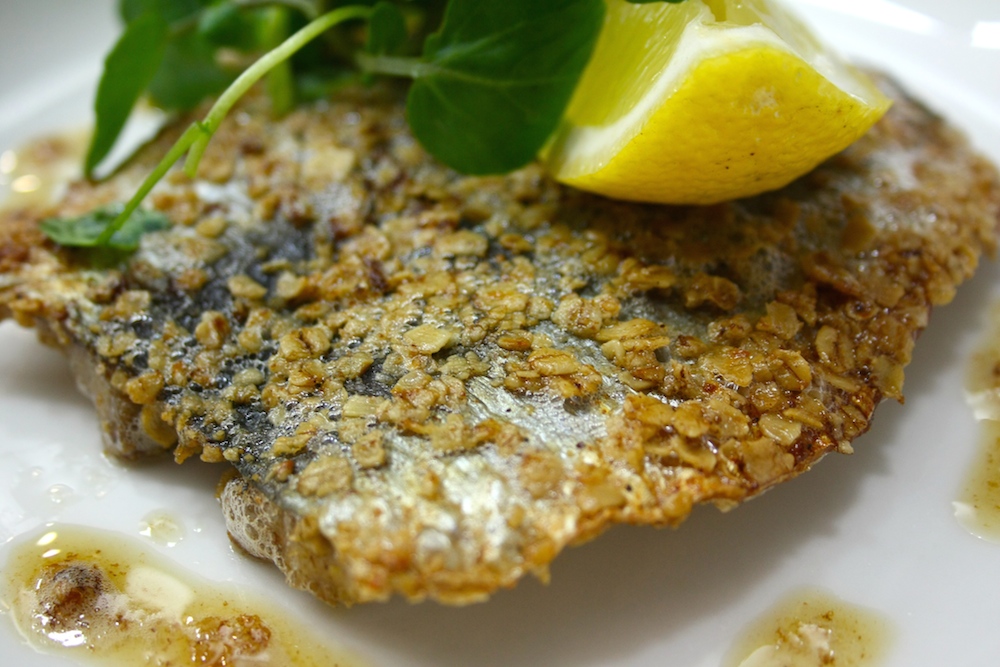
NEIL'S RECIPES: HERRING IN OATMEAL

by Cafe St Honoré in


Great friends of mine get so excited about the arrival of the herring season that they buy as much as they can and eat it for breakfast, lunch and dinner - pickled, kippered, soused and grilled! A simple fillet fried in butter and oats is my favourite method. And herring’s health benefits are not to be scoffed at. As a nation we should champion these old, but now scarce, treats when in season.

Serves 4

INGREDIENTS

4 fillets of fresh herring

1 large handful of medium oats (I use porridge oats)

100g butter, melted

2 tbsp fresh lemon juice

Salt and pepper

A squirt of cold-pressed rapeseed oil

Knob of butter

A handful of salad leaves (I like watercress), to serve

1 lemon, to serve

METHOD

On the hob, heat a pan to a moderate temperature and add the rapeseed oil and a knob of butter.

Dip the herring fillets in the melted butter, then in the oats.

Place the fillets into the hot pan skin-side down and cook for a few minutes on both sides until golden. Season with a little salt, pepper and lemon juice as you cook.

To serve, simply plate the fish with some leaves and a wedge of lemon.


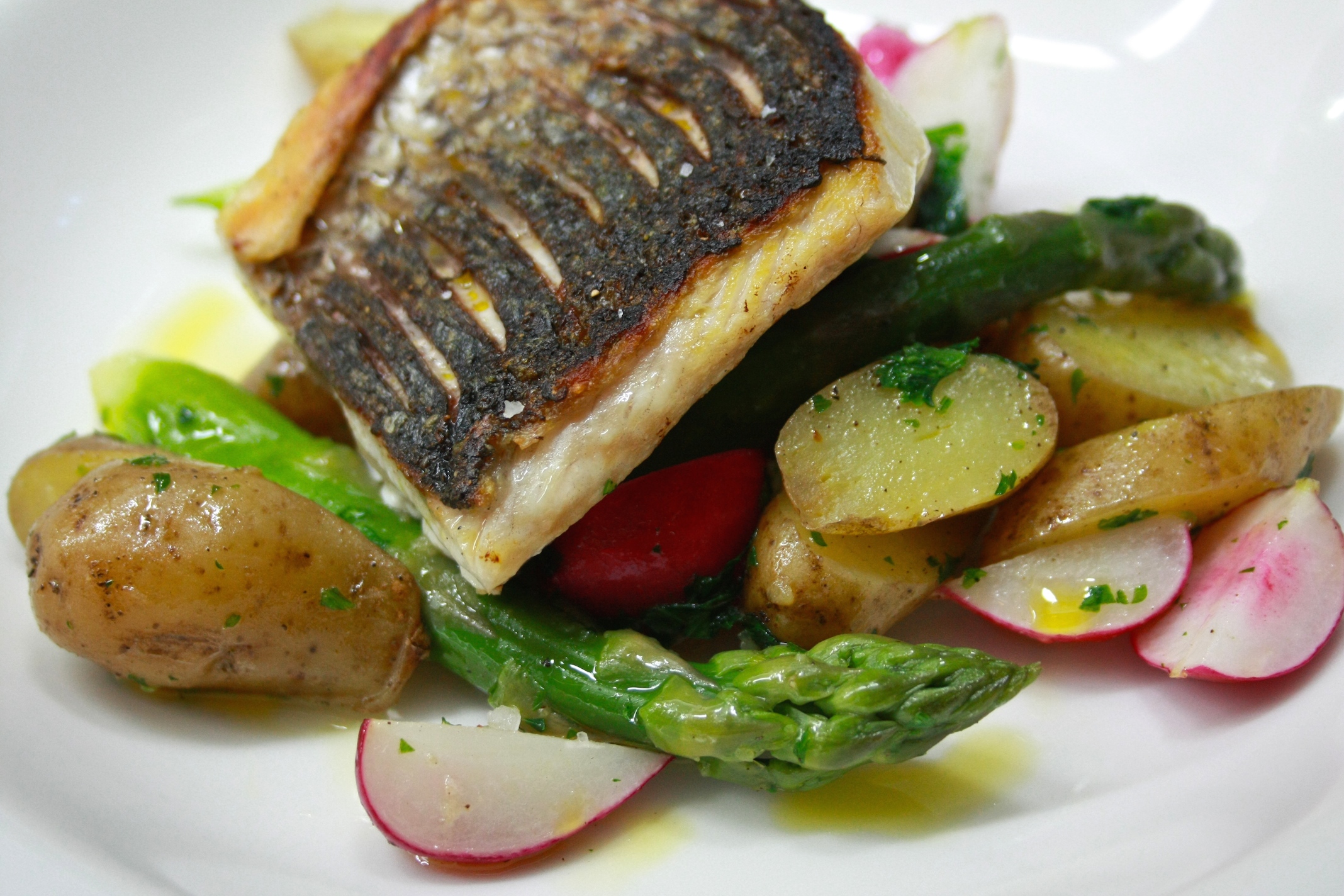
NEIL'S RECIPES: GREY MULLET, HERITAGE POTATOES, RADISHES AND ASPARAGUS

by Cafe St Honoré in


This is a brilliantly easy dish. If grey mullet isn’t for you, or you can't find it, then sea trout will work a treat. I use Carroll’s heritage potatoes as they go to huge efforts to keep these wonderful old varieties of tatties alive. Choose their Pink Fir Apples or Sharpe’s Express and keep the skin on (just give them a wee scrub).

Serves 4

INGREDIENTS

4 grey mullet fillets, skin on, pin-boned and scaled

8 or so heritage potatoes, gently scrubbed

1 handful of halved fresh radishes, I prefer the French Breakfast variety

8 to 12 spears of asparagus

50ml cold-pressed rapeseed oil

Lemon juice to taste

A knob of butter

Sea salt and black pepper

A few fresh herbs, curly parsley or chives

METHOD

Gently scrub the potatoes, leaving the skin on, then cook in salted water on a low simmer until just soft (about half an hour). Drain and allow them to cool slightly before slicing.

Next, remove the woody ends of the asparagus and drop into boiling salted water for 1 to 2 minutes, depending on their thickness. Refresh in cold water.

Gently heat half the oil in a frying pan on the hob. Fry the fish skin-side down for about 4 to 6 minutes until golden brown. Remove from pan and keep warm.

Add a knob of butter to the same frying pan and add the asparagus, potatoes and radishes. Season with salt, pepper, a little lemon juice and a few chopped herbs.

Divide this mix between 4 warmed plates, placing the fish on top.   Add a final season of salt, a squeeze of lemon and a drizzle of rapeseed oil to each dish and serve.


NEIL'S RECIPES: WILD LEEK, WILD GARLIC AND POTATO SOUP

by Cafe St Honoré in


Those of you who walk near riverbanks will be all-too-familiar with the heady aroma of wild garlic, or ransoms, in the air. But before you pick and eat, double-check you’ve correctly identified it and give the leaves a thorough wash.

Makes 4 portions

INGREDIENTS

2 large potatoes, Maris Piper or Rooster

250g wild leeks, thoroughly washed

250g wild garlic, thoroughly washed

1 medium-sized onion, finely chopped

75g butter

Sea salt and black pepper

A few sprigs of curly parsley

METHOD

Melt the butter in a thick-bottomed pan and fry the onion for 10 to15 minutes until soft (but not coloured).

Dice the potatoes, about 1 inch thick, and add to the pan, now cover with hot water and about and inch or two more and bring to the boil.

Meanwhile, roughly chop the wild garlic and leeks, and when the spuds are starting to soften add the greens and season with salt and pepper. Cook for a further 10 minutes.

Finally, add the roughly-chopped parsley and serve piping hot in a warm bowl. Top with grated cheese or croutons if you like.


NEIL'S RECIPES: MILLIONBERE SHORTBREAD

by Cafe St Honoré in


I’ve tweaked the classic recipe a little to make use of beremeal, instead of just flour.  Beremeal, a form of barley, was used to make bannocks before ‘posh’ flour was introduced to Scotland.  It has a nutty flavour and a great taste and you can buy it in health food stores or online.  It’s milled today on Orkney, and still available in Caithness and Shetland too - but only if we keep up demand for it.  It comes highly recommended by this chef!

A slice of heaven...

Enough for a 12” square brownie tray.

INGREDIENTS

125g unsalted butter

65g caster sugar

75g plain flour

75g beremeal

40g cornflour

1 tin condensed milk

100g milk chocolate

A splash of double cream

METHOD

Heat oven to 130 °C.

Place the tin of condensed milk into a pan and cover with water. Boil steadily for 3 hours, ensuring the water never boils away.

To make the base, cream the butter and sugar together for 3 to 4 minutes before adding the beremeal, plain and cornflour. Mix well.

Press this mix into a greaseproof-paper-lined tray - the pastry should be roughly 1cm thick -and bake for around 30 minutes until golden.

Open the tin of condensed milk (once it's cooled down), which will now be caramel, and spread evenly over the cooled shortbread.

Meanwhile, melt the chocolate in a bowl over hot water and when melted add a splash of cream.

Pour the chocolate mix over the caramel, using a palette knife to spread evenly. Place in the fridge for a couple of hours before cutting into pieces with a hot knife. Enjoy with a cup of tea!